
Kalibriergewichte
-
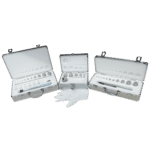 OIML Gewichtssätze
Adams OIML Gewichtssätze gibt es in mehreren Klassen. E1 und E2 Gewichte bieten eine hervorragende Präzision für die Kalibrierung von analytischen und Präzisionswaagen. F1 Gewichte eignen sich für die Kalibrierung von Präzisionswaagen. Die M1-Gewichte eignen sich hervorragend um kompakte Waagen zu kalibrieren.
WeiterlesenAlle Details anzeigen -
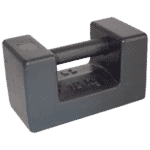 Gewichte OIML Klasse M1 - Gusseisen
Adam Equipment Gusseisen Gewichte sind nach OIML Standards gefertigt. In der OIML M1 Klasse angeboten, sind diese Gewichte in hohen Kapazitäten erhältlich und eignen sich hervorragend für die Kalibrierung von größeren Waagen.
WeiterlesenAlle Details anzeigen -
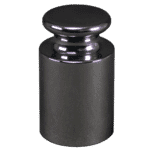 OIML Prüfgewichte
Adams OIML Gewichte sind in Sätzen oder separat erhältlich. Einzelgewichte werden in einer Kunststoffbox verpackt, während Gewichtssätze in einer gefütterten Aluminium Box verpackt sind, komplett mit Zange und weißem Baumwoll-Handschuh.
WeiterlesenAlle Details anzeigen
FAQ
What calibration weight class you purchase depends on the type of balance you own.
If you work with a semi-micro balance, we recommend E1 class weights. For analytical balances, class E2. Class F1 is sufficient for calibrating precision balances, while M1 weights are ideal for compact balances, bench and floor scales.
While it may be tempting to "level up" and use E1 weights for a compact balance, you'll find that E1 weights are priced according to their superior precision.
We go more in depth on this topic in our blog.
Stainless steel weights are considered more finely designed than cast-iron calibration weights, and they're used for different purposes. Stainless steel weights are used to calibrate lab balances, compact balances and even some more precise bench scales. Meanwhile, cast-iron weights can weigh into the hundreds of kilograms, so they're better for calibrating floor and platform scales.
To properly maintain your calibration weights, keep them in their case when they're not in use. They should be stored in a cool, dry place on a sturdy surface.
When using your calibration weights, never touch them with your bare hands. The oils on your fingers can stick to the stainless steel, impacting its weight as an immediate consequence and even degrading the steel as a long-term issue. Use cotton gloves or tweezers.
Avoid scratching or dragging your weights across the weighing pan when picking them up or setting them down. Not only can this scratch the weight, it can also encourage static to develop from the friction.
Use a soft-bristled brush or a micro-fibre towel to keep lint and dust away from the weight. They can both add a minute amount of weight that seems insignificant, but matters when you begin weighing to the fifth decimal place.